One of the best world building I’ve seen in anime. Studio orange who animated this kinda stood out with it’s choice to heavily rely on CGI. But it is largely agreed that it was a fantastic decision considering how well this anime turned out.
The character development was so good in this series. If the characters in this series get chipped or lose parts of their body, they literally lose parts of their memory. And if they replace it some other item instead of the piece they lost, their character is altered according to how large the modification was. And there are a lot of instances exactly where this happens.
There is only one human in the whole story and he has special powers. The gem stone people go around destroying sun spots, and it’s not clear why they’re doing this or why the sun spots are trying to steal the gems. My initial guess was that maybe they can combine different things and create a human, but I am too uninformed to say if that’s true. There is no much mystery, so much to discover, and it’s all so well laid out.
The sound tracks created for the show work wonderfully together as well.
It feels like I’ve only seen a small portion of what the story has in store and I’m really excited to see or read what’s up ahead.
I had high hopes for this anime, since I’d read the manga quite a bit and liked it a lot. It had all these cool terms and designations for different types of lords and beasts.
Something I really liked about the story was how the main character would build things which would end up making a huge difference for MC and his crew. I thought this was really nice to see since innovation was set on high pedestal and this is often true in real life as well.
But I did not like the harem like nature of the show, it seemed childish and lame.
The anime however did not live up to my expectations and while it was engaging, it was nothing to write home about.
Several cool details like the awakeners of god were simply mentioned and forgotten. The original manga contains much more details and world building.
In the anime I was able to notice important points like how the MC wasn’t truly a very good person, not the typical protagonist. He was manipulative and calculating.
He would beat up and kill fellows to make an example out of them. Favor women over men, so that he could eventually sleep with the women and eat the men. Give captured enemy soldier the freedom to leave, but later go and kill them once they’re far enough away from headquarters. In every step the main character is thinking about how something can benefit himself or his familiars. And it’s truly evident that the crew only matters to him because it becomes an extension of himself after a while.
He and only he mattered to the MC for much of the beginning of the show. And that really made the show quite unique.
This is a good adaptation, but perhaps not the best series to adapt into an anime. Without better script keeping it interesting, it becomes rather boring a show.
Decent animation. The story is rather peaceful at the start, and I was somehow reminded of Frieren. Later on, I found out that there really wasn’t all that much behind the anime in terms of story. It was simply, there’s this really strong water mage, because he’s the main character, and we get to watch him show off to others just how strong and superior he is.
A lot of animation looks really good though.
And thankfully not every scene ends with MC showing up and saving the day. Although all the important ones come to an end with the MC’s help.
I wasn’t sure I would like this, but decided to give it a shot anyway since the trailer received a lot of attention. The first episode was alright and I was somewhat impressed by how well the animation studio made use of the short run-time.
After the first episode though, it quality of the show fell off a short cliff. Nothing much really happened throughout the other episodes. Plenty of time was wasted going over meaningless details, like the arrangement of the rooms in cleaners headquarters, food and mc eating food – which added almost nothing to the story, backstories of side-characters who would be killed off very quickly and much more.
Every other shot was a little too long. Several episodes can be completely skipped and you would have missed nothing.
The show acts like it doesn’t have enough material to work to animate into a nice show, it’s literally the first season, they should have plenty of material to use.
The show kept me interested enough to watch the next episode. But every few minutes I would be reminded of how absolutely nothing important happened in the whole episode.
This is not a real movie, it’s simply several episodes stitched together into something that has a movie-like runtime. I was so disappointed by how little the series managed to cover.
The movie went into one sad backstory after the other. And ended up taking too much runtime. I wish I hadn’t went to the theater to watch this.
Since they released it as a movie, I’ll be reviewing it as if it were a movie.
I’ve been thinking of air recently. Specifically the air quality in my room.
Every time I come back home, the house air in the house feels distinctly stale, like it’s lacking in circulation, and a little moist. I have a few flatmates and the HVAC system cuts off after getting to the desired temperature, which means no circulation, which means the air I am breathing in is likely far from fresh.
I do often feel this sense of lethargy and lack of motivation, which I’ve often associated with the food I eat, but I noticed this week, that even when I strictly control the food I eat, there are still several occurrences of fatigue throughout the week. The next item to investigate then was the air. If the air feels old and musty, it could be the culprit! That which tries to stall my progress must get the axe.
I was also comparing my own experience to those of others in my room and friends not in my vicinity. My roommates also experience long periods of fatigue and fall asleep often. This could be due to the air quality issue I mentioned.
Another set of friends who are women happen to experience no such reduced performance, regardless of their HVAC running vs not running. Either that, or the effect isn’t pronounced enough to be of notice.
This reminded me of how women and men often sneeze.
As I understand it, this is because men generally have larger lungs than women and are able to expel far greater quantities of air than women are.
This leads me to think that men need more resources than women to operate at peak performance for extended periods of time. This could apply to air quality as well.
If this is true, then companies should hire more women, since they run more efficient than men. They should start doing that after they have hired me though.
This morning I was feeling quite weird and un-energetic and decided to open the window, and I do feel better now, though I can’t yet conclude that opening the window was the sole cause.
I’ll be getting an air quality sensor and collecting better data on air quality and it’s effects on sustained performance in front of the computer.
The movie felt like watching an actual F1 race, but I was only about as excited as an actual race could make me. I consider this a negative, as I couldn’t find much that validated the movie’s existence.
While the film was technically good, I personally did not like various creative decisions. For example, the choice to include actual F1 race car drivers and teams only to show them being defeated by two fictional characters felt disappointing. Furthermore, there wasn’t much in the way of character development or other strong aspects that would have elevated the movie. The main character is played by Brad Pitt, who is now 61 years old.
I’ve attended few hackathons, often through ASU, and they’ve painted a disappointing picture of what hackathons are or have become.
Online, especially in memes, hackathons are often portrayed as high-energy events full of incredibly skilled, competitive developers building impressive prototypes in record time. In reality, many of the ones I’ve attended were filled with students still very early in their learning journeys, several struggling with basic remote deployment or project setup.
Most recently, I attended Sunhacks, one of ASU’s larger hackathons. While I appreciate the effort that went into organizing it, I left unsure of what the event was really trying to achieve.
The strong presence of sponsoring companies, Google, Amazon, Base44, and others, seemed to steer the event toward lame AI-related projects. I don’t think this was intentional; it’s just what happens when the showcased tools and challenges revolve around LLM APIs. As a result, many teams, including mine, ended up producing AI-driven web apps that all felt somewhat similar. Very few projects stood out as novel or experimental, and even the more creative ones didn’t seem to receive much recognition.
The judging process also suffered from scaling issues. There were too few judges for the number of teams, which likely led to uneven evaluations. Early teams had a better chance of being seen thoroughly, while others may have been skipped or reviewed hastily. This kind of fatigue bias is well known, and should be easy to plan around, but somehow, the organizers missed it completely.
That said, there were positives. The event offered great opportunities to socialize and meet new people, and I got to see several neat ideas and clever implementations from other teams, even if none of them ended up winning.
Still, it’s hard not to notice the broader trend. With the economy tightening and companies hiring fewer students, there’s a growing sense of disengagement at these events. Many company representatives seemed to be there merely to maintain a presence, devoid of any real enthusiasm.
It maybe suggests a larger trend, a waning trust in the economy at large, where both companies and students are becoming more cautious, more restrained, and less optimistic about the near-term and possibly long-term as well.
If you’ve had a different experience, I’d love to hear your thoughts.
I had an opportunity to volunteer at Feed My Starving Children (FMSC), and I came away amazed not just by their achievements, but by how well they’ve built everything around their mission.
Most nonprofits struggle to balance compassion with coordination, but FMSC has somehow mastered both. They’ve built a machine that blends technology, logistics, marketing, branding, capital, man-power, the spirit of competition and goodwill into something that feels more like a community celebration than charity work.
Turning Labor Into Leverage
Running any operation, even nonprofits, costs money. Labor, especially in developed countries, is expensive. But FMSC has flipped that challenge on its head. They use volunteers, and the volunteers are also part of their marketing.
Almost everyone in their packing facilities is a volunteer, from the people sealing bags to those stacking boxes on pallets. And yet, it doesn’t feel like “work.” They’ve made volunteering fun by gamifying the whole process.
The Joy of Packing Meals
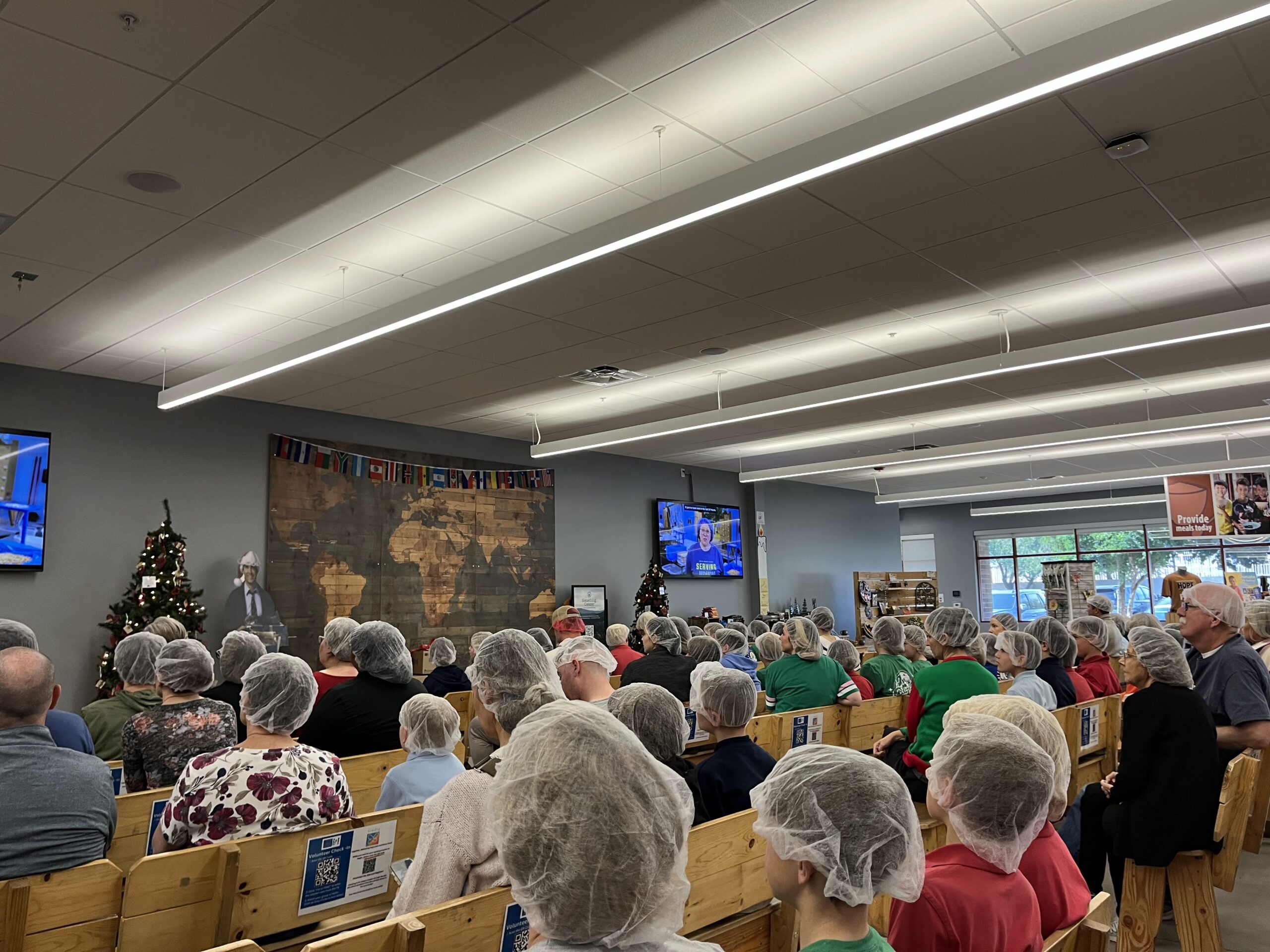
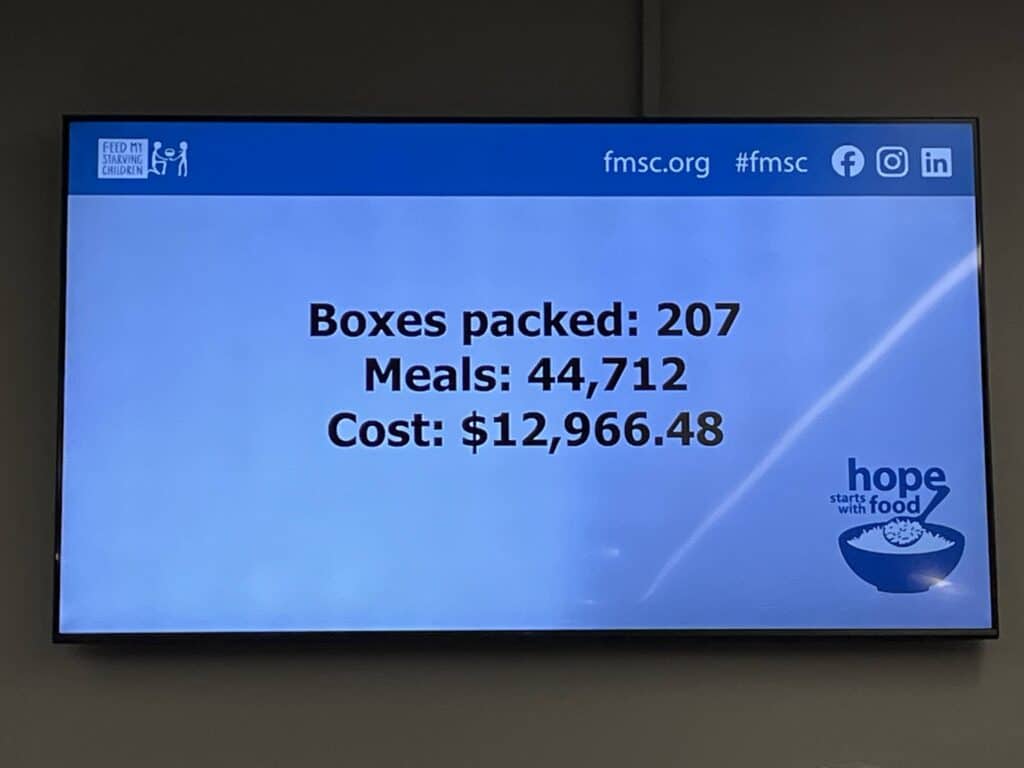
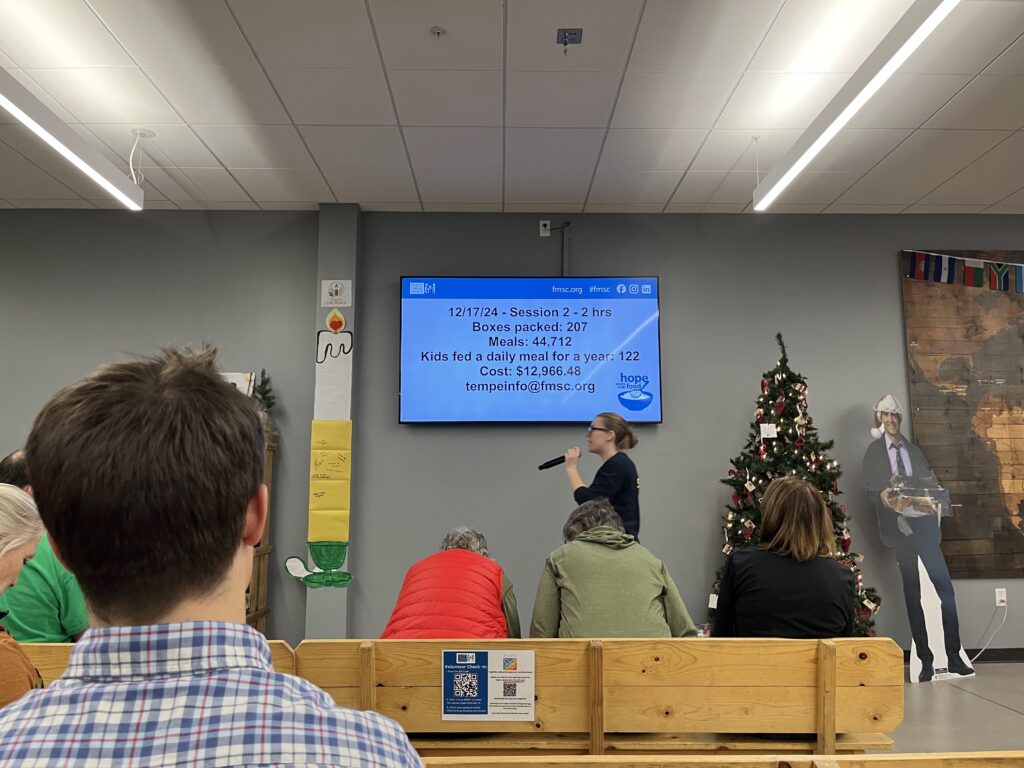
When I joined, our group had six packing stations competing to see who could pack the most meals. Every few minutes, someone would shout out, announcing that one more box had been packed, everyone would cheer, and we’d push to beat the other tables. In just two hours, our group packed over 44,000 meals, enough to feed thousands of children. This would not be possible without FMSC’s fantastic planning and execution.
There’s music, energy, laughter, and a sense of friendly rivalry that makes time fly. It’s smart design: people want to help, but they also want to feel like they’re part of something exciting and effective. FMSC gives them exactly that.
The Tech Behind the Impact
What impressed me most, though, was the technology behind the experience. Everything runs smoothly because of their website and digital systems.
You sign up online, pick a location and time slot, get email reminders leading up to your shift, and even receive a confirmation after you check in at the facility. The website isn’t just functional, it’s strategically built to eliminate friction at every step.
It also handles:
Volunteer scheduling and time slot management
Group coordination (for schools, churches, or companies)
Donations and meal sponsorships
E-commerce for artisan goods made by communities in places like Haiti
Impact tracking and progress updates
The entire volunteer experience — from sign-up to packing — feels like it’s been engineered for engagement. And that’s where FMSC really stands out. They’ve invested in systems that scale generosity.
Trust and Transparency
People give their time and money when they can trust it’ll make a difference. FMSC reinforces that trust beautifully. Every session begins and ends with real numbers, how many meals you packed, how many kids that feeds, and where it’s going.
They also partner with schools, churches, and local organizations in Africa, Haiti, and other countries to ensure the food gets where it’s needed most. You can see the results right there on their website, stories of children who are healthier, growing, and even able to go to school because of these meals.
Engineering Hope
Their signature product, MannaPack Rice, is another brilliant example of practical engineering. It’s a carefully formulated blend that provides all the basic nutrition a child needs, easy to store, easy to ship, and hard to spoil.
It’s so efficient that I found myself wondering if I could buy some for myself. It’s like a “universal meal,” designed purely for function.
A Place for Everyone
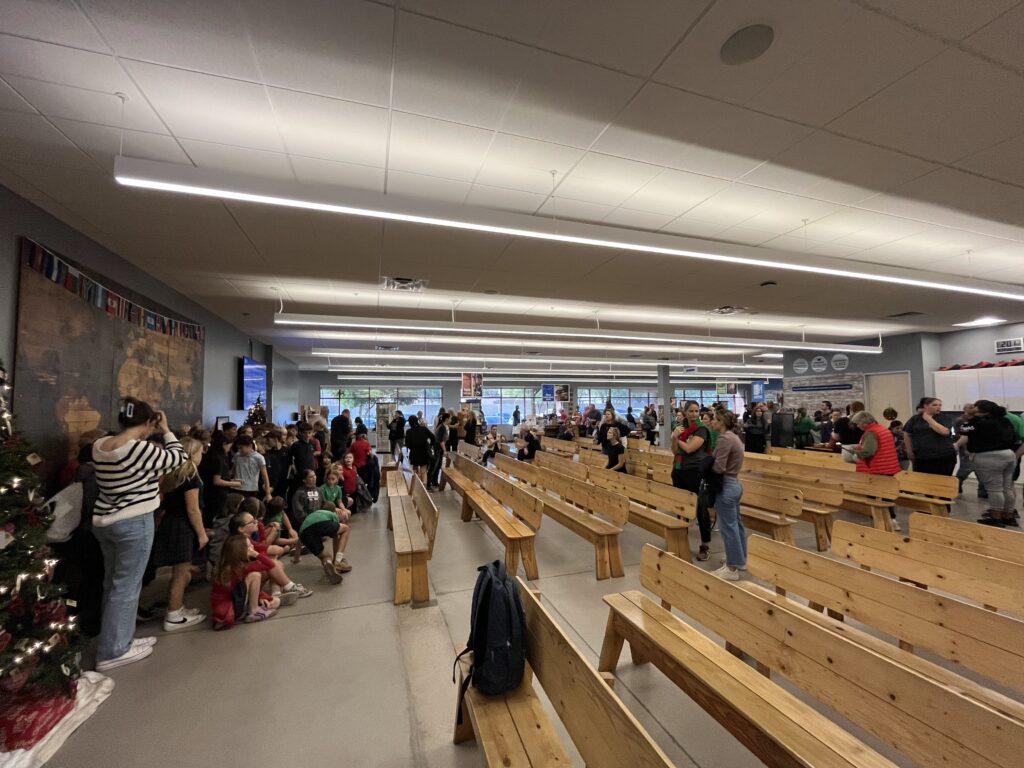
What struck me most during my visit was the mix of people. Seniors, kids, entire families, all working together. Some came with churches or schools, others with coworkers. For a few hours, everyone is focused on a shared mission.
And because the process is so streamlined, both in person and online, the barrier to entry is almost nonexistent. You just sign up, show up, and make a real impact. That’s what good technology should do.
Why FMSC Works
Feed My Starving Children doesn’t just rely on compassion. It designs for it. From the way they automate volunteer scheduling to how they communicate results, every part of the experience is intentional.
It’s not just a nonprofit, it’s a tech-enabled movement built around human connection. And it works.
Volunteering at FMSC has been quite a learning experience for me. And I hope other firms can also replicate how FMSC is running the operation.
I’ll definitely be going back. And I’ll be telling everyone I know to try it, not just because it feels good to help, but because it’s inspiring to see how smart design and engineering can turn goodwill into global change.